Painting tools
How to Choose a Travel Watercolour Palette
Choose a travel watercolour palette by mixing space, half-pan fit, working footprint and pack-down. A practical checklist for painting away from your desk.
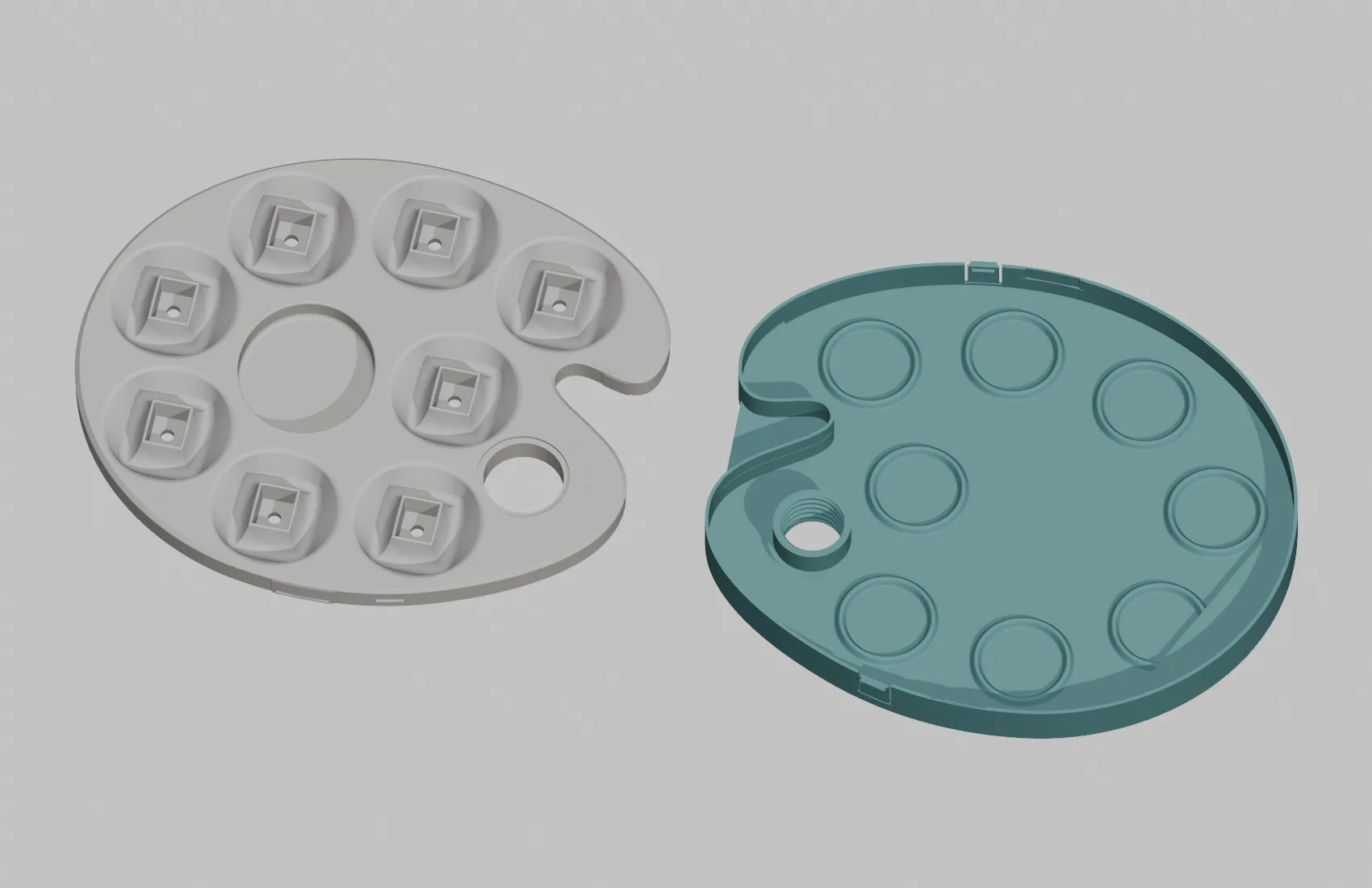
A travel watercolour palette needs to work when it is open, as well as fit in your bag when it is closed. Start with the colours you actually use, then check mixing space, brush access, stability and how you will carry water. More paint pans are useful only if they leave enough room for the way you paint.
This guide is a selection checklist for your next palette. For the layouts and contents in our own developing range, see the We Glow Up paint palette comparison.
Count working colours and mixing areas separately
Think about a typical sketch rather than every colour in your collection. Which colours do you reach for directly, and which do you mix? Write that shortlist down before comparing pan counts. A large number of colours can look appealing in a photograph while leaving a cramped working surface for your brush.
Give mixing areas the same attention. If you prepare several washes at once, consider where each mixture will go. If you use a broad brush, check that it can move comfortably across the mixing surface. A deep compartment for paint storage and a broad surface for mixing solve different problems.
Check half-pan fit before filling anything
An empty half-pan palette lets you choose your own paints, but confirm the dimensions and retention method for your particular pans. Do not assume that every product described as a half pan has an identical outside shape. Check whether pans can be removed individually and whether replacements are readily available.
Look carefully at the contents list. Some travel sets include paint and a brush; others supply empty pans or just the palette body. For example, Winsor & Newton’s Complete Travel Tin combines filled half pans with lid mixing areas. Compare like-for-like contents when assessing value.
Measure the open footprint
Draw the proposed open palette size on paper and put your sketchbook beside it. Add a water container, cloth and the brush you use most. This simple rehearsal shows whether the whole arrangement fits your likely table or painting position.
- Can you reach water without passing a wet brush over the sketchbook?
- Does the lid need extra clearance to open fully?
- Is there a safe place to rest the brush between strokes?
- Can you access the colours without repeatedly moving the book?
If you intend to mount a palette, confirm the connector, supported arrangement and stability before buying accessories. A mounting description alone does not establish compatibility with your stand.
Plan water and pack-down as separate jobs
A water holder is not necessarily a sealed bottle. Carry water in a container designed for transport, and follow the holder manufacturer’s instructions during use. Before packing, remove loose water, secure the pans and protect damp artwork separately. Check whether the palette is intended to close with wet paint; a lid alone does not prove a watertight seal.
Keep a small checklist in your kit: palette, paints, brush, water, cloth, sketchbook and a way to carry used materials home. The best kit is the one you can set up and put away consistently.
How our palette layouts approach the choice
We Glow Up’s launch preview offers nine paint-pan stations or eight with a central mixing or rinse basin. Both use a lid that doubles as a mixing dish. Core supplies the body, low-profile lid and connector; Field adds brush and water holders. Paint, half pans, brushes and a tripod are not included.
The range remains a launch preview, with payment and reservations closed. Fit status varies by configuration and stand fitting is confirmed before launch. Review the current kit contents and compatibility notes before enquiring. If your main challenge is working at a shared table, our small-space painting setup guide will help you plan the complete arrangement.